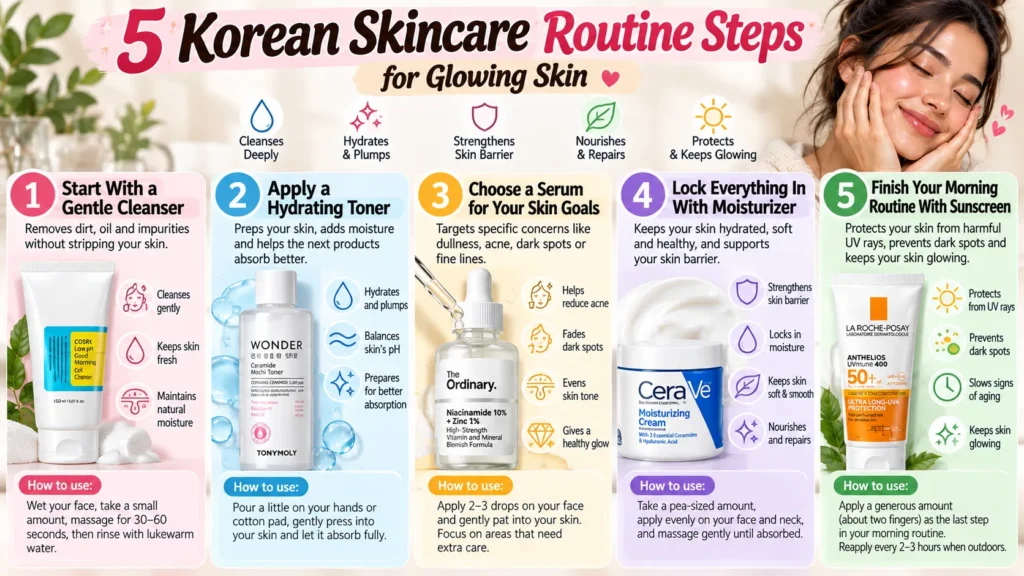
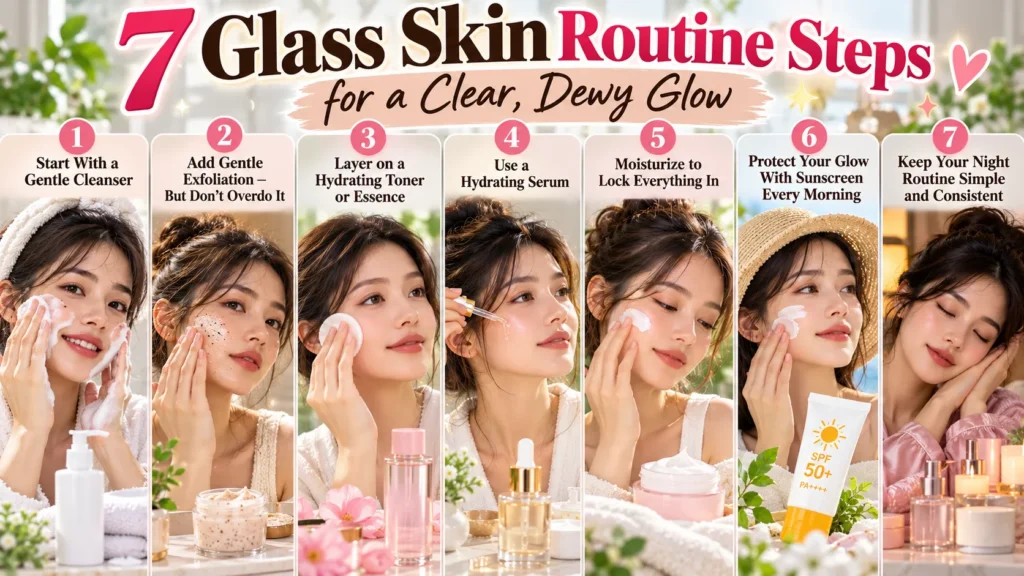
Glass skin sounds almost unreal: smooth texture, fresh hydration, and that healthy glow that makes your complexion look naturally luminous. But here’s the good news—you don’t need a 15-step routine or a bathroom shelf that looks like a skincare store.
A good glass skin routine focuses on consistency, gentle cleansing, hydration, moisturizing, and daily sun protection. The goal isn’t pore less or perfect skin. Real skin has pores, texture, and occasional breakouts.
Instead, think healthy, hydrated, comfortable-looking skin with a natural dewy finish. These seven steps will help you build a practical routine without overwhelming your face—or your wallet.
1. Start With a Gentle Cleanser
Great skincare starts with clean skin, but “clean” shouldn’t mean tight, squeaky, or stripped.
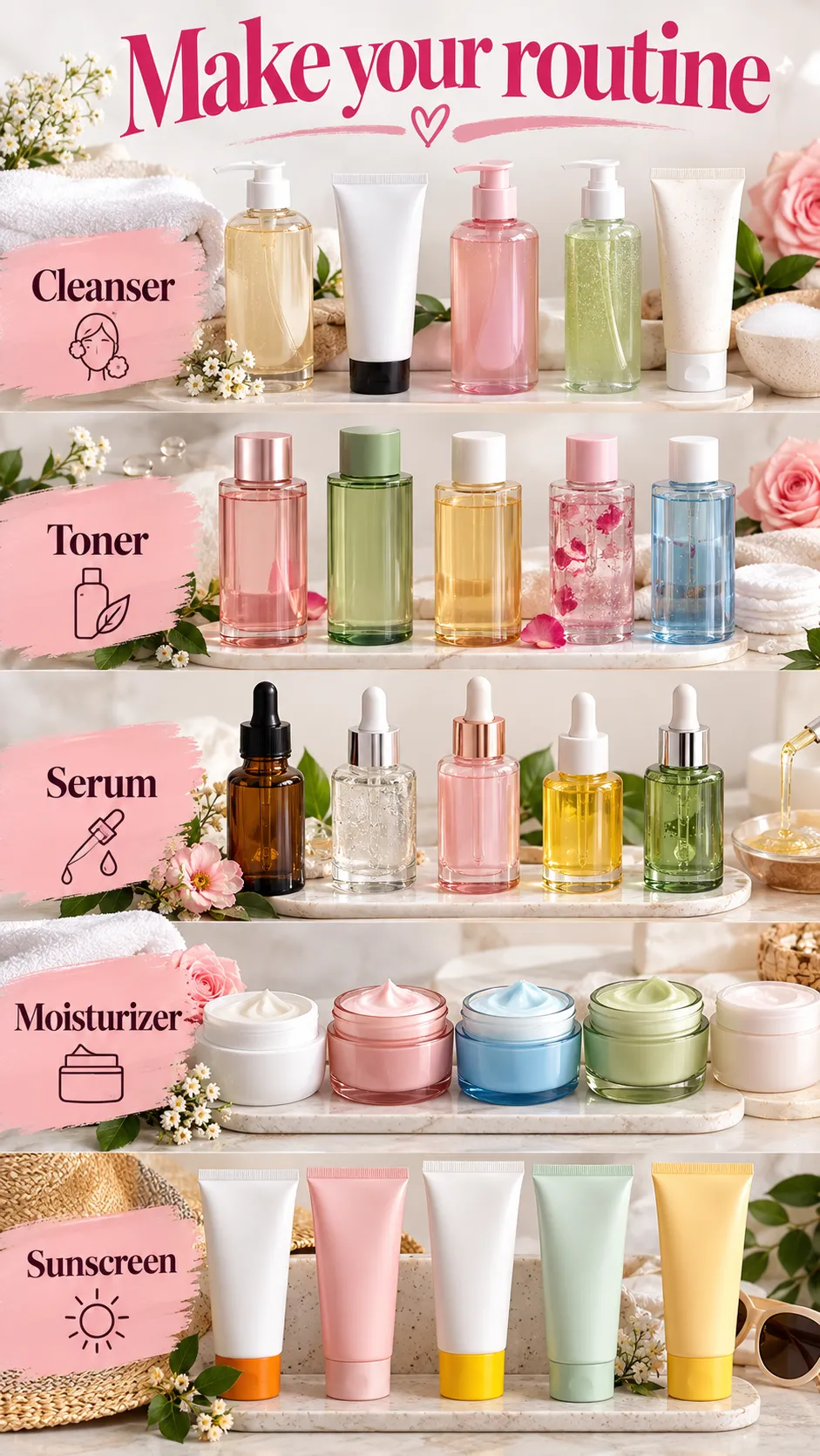
Choose a gentle facial cleanser that removes sweat, oil, sunscreen, and everyday buildup without leaving your face uncomfortable. Harsh cleansing can disrupt your skin barrier and make dryness or irritation more noticeable.
For dry or sensitive skin, a creamy or low-foaming cleanser often feels comfortable. If your skin gets oily, you may prefer a lightweight gel cleanser.
The important part? Don’t judge a cleanser by how much it foams. More bubbles don’t automatically mean cleaner skin. Your face isn’t a dinner plate.
Massage your cleanser gently over damp skin, then rinse with lukewarm water. Very hot water may leave skin feeling dry or irritated.
At night, people who wear makeup or water-resistant sunscreen may prefer a two-step cleanse. Start with a cleansing balm, oil, or micellar water, then follow with your regular gentle cleanser.
However, you don’t need to double cleanse just because social media told you to. If one cleanser removes everything comfortably, keep things simple.
2. Add Gentle Exfoliation—But Don’t Overdo It

Want smoother-looking skin? Exfoliation can help, but this is also where enthusiastic skincare routines can go very wrong.
Your skin doesn’t need aggressive scrubbing every morning and night.
Depending on your skin and product, gentle exfoliation once or twice a week can be a reasonable starting point. Then watch how your skin responds.
Chemical exfoliants commonly include ingredients such as:
- AHAs, including glycolic and lactic acid
- BHA, usually salicylic acid
- PHAs, which some people choose when they want a gentler option
AHAs generally work on the skin’s surface and can help improve the look of dullness and uneven texture. Salicylic acid can enter oily pores, which makes it popular with people who experience clogged pores or oily skin.
However, more exfoliation does not equal more glow.
If your skin starts burning, stinging, peeling, or becoming unusually red, back off. A damaged, irritated skin barrier is pretty much the opposite of the glass-skin look we’re trying to achieve.
Physical scrubs deserve caution too. You don’t need to scrub your face like you’re trying to remove a stain from a countertop.
Gentle wins.
If you use retinoids, acne treatments, or other strong active ingredients, be especially careful when adding exfoliating acids. Combining too many active products can irritate your skin.
When in doubt, simplify.
3. Layer on a Hydrating Toner or Essence
Now we get to the part that gives a Korean glass skin routine its signature juicy, hydrated feel.
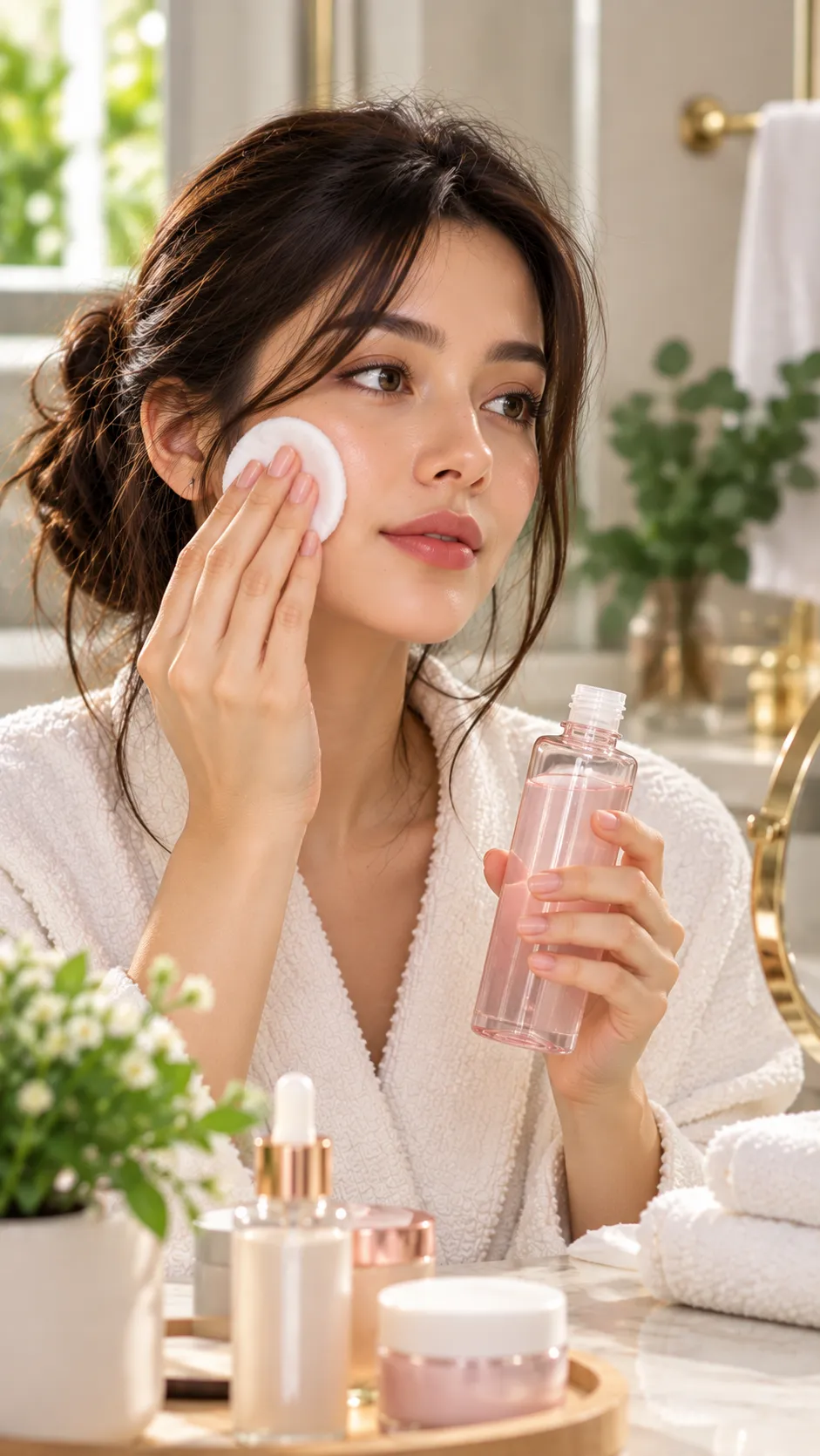
After cleansing, apply a hydrating toner or essence while your skin still feels slightly damp.
Forget the old-school idea that every toner needs to make your face feel squeaky clean. For this routine, look for formulas designed to hydrate and soothe.
Ingredients you may see include glycerin, hyaluronic acid, panthenol, beta-glucan, or centella asiatica.
Pour a small amount into clean hands and gently press it into your face. You can also use a cotton pad, but hands work perfectly well and waste less product.
Do you need seven layers of toner because somebody on TikTok did it?
Nope.
One good layer may be enough. If your skin feels particularly dry and the product suits you, you can apply another thin layer.
The goal is hydration, not turning skincare into an endurance sport.
FYI, slightly damp skin can work especially well before your next hydrating step. Just don’t leave all that hydration sitting there without following with moisturizer.
4. Use a Hydrating Serum
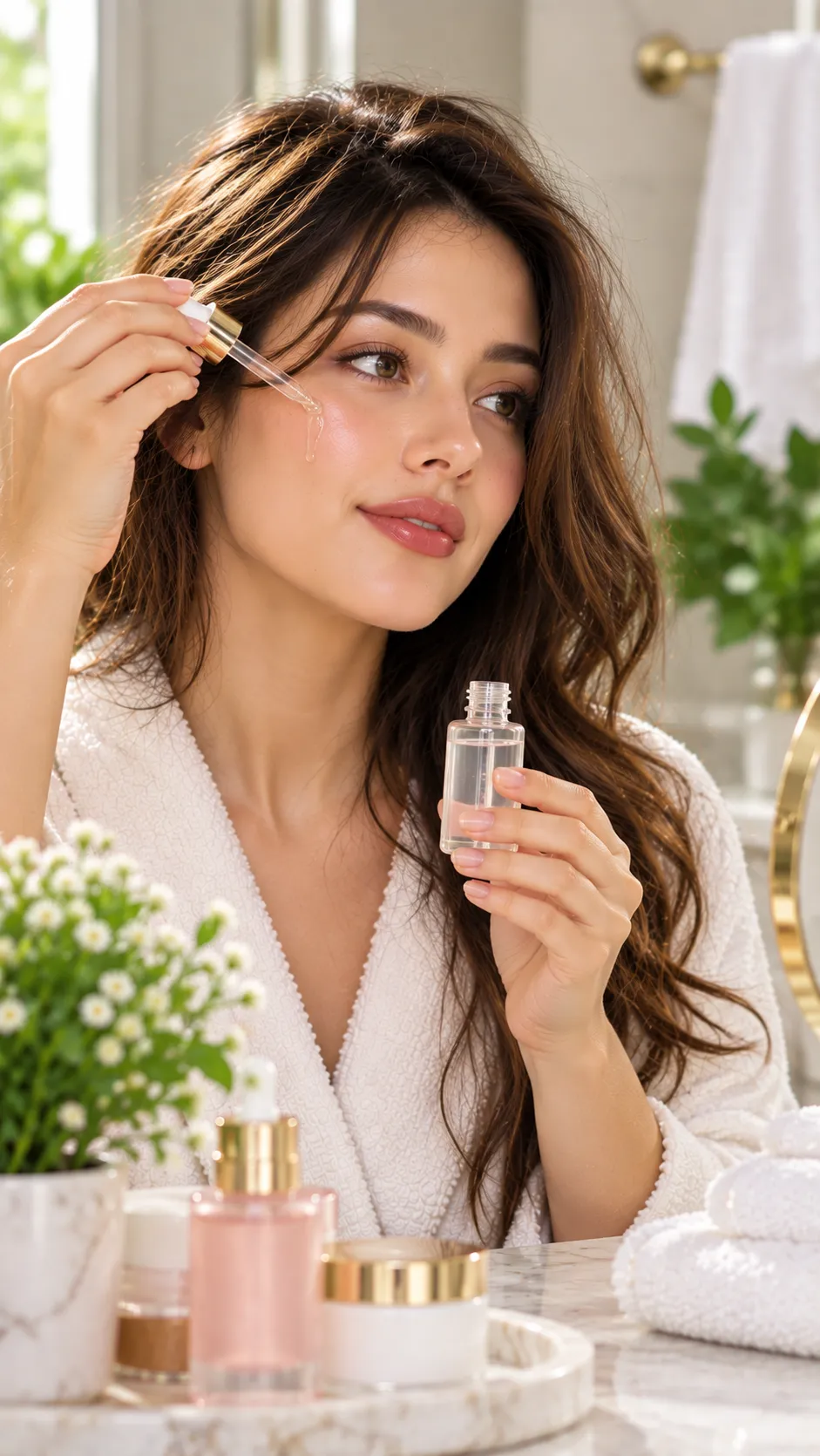
If toner gives your skin a drink, think of a hydrating serum as the next round.
A serum can deliver lightweight hydration without adding a heavy or greasy feeling. This makes it particularly useful when you want dewy skin but dislike thick products.
Look for ingredients such as hyaluronic acid, glycerin, panthenol, ceramides, or niacinamide, depending on your skin’s needs and tolerance.
Hyaluronic acid attracts water, while glycerin also works as an effective humectant. Ceramides can support the skin barrier, and niacinamide may help with several concerns, including the appearance of uneven tone and oiliness.
But please resist the urge to use five serums at once.
I prefer a simple routine because it makes it much easier to figure out which product your skin actually likes. When you introduce several new formulas simultaneously and irritation appears, good luck identifying the culprit.
Apply a few drops and gently spread the serum over your face.
Then give it a moment before moving to moisturizer.
Thin layers usually work better than flooding your skin with product. Glass skin should look hydrated, not like your serum bottle accidentally exploded.
5. Moisturize to Lock Everything In
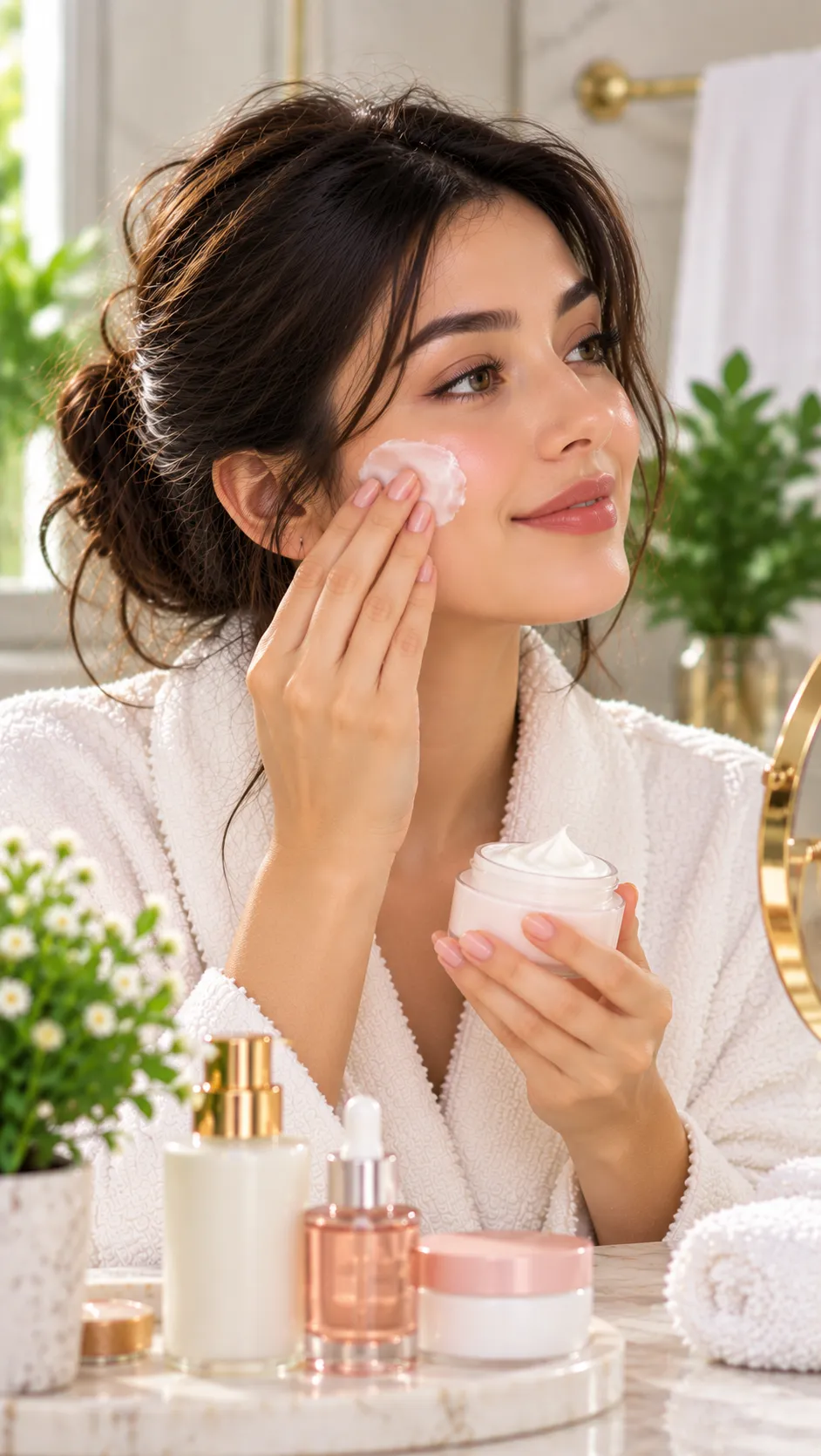
Hydration without moisturizer can feel a little like filling a bathtub without putting in the plug.
After your toner and serum, apply a moisturizer that suits your skin type. This step helps reduce water loss and supports your skin barrier.
If you have oily or combination skin, try a lightweight gel-cream or lotion. Dry skin may feel better with a richer cream containing ingredients such as ceramides, squalene, or other emollients.
Sensitive skin? Simpler formulas may work better, especially if fragrance tends to bother you.
And yes, oily skin can still need moisturizer.
Skipping it because your face produces oil doesn’t automatically solve anything. Instead, choose a texture that feels comfortable and doesn’t leave you overly greasy.
Apply your moisturizer gently across your face and neck.
You don’t need a huge amount. A comfortable, even layer does the job.
IMO, this is one of the most important glass skin routine steps because healthy-looking glow depends heavily on keeping the skin barrier comfortable and hydrated.
When your skin feels dry, flaky, or irritated, piling highlighter on top won’t magically fix the foundation underneath.
6. Protect Your Glow With Sunscreen Every Morning
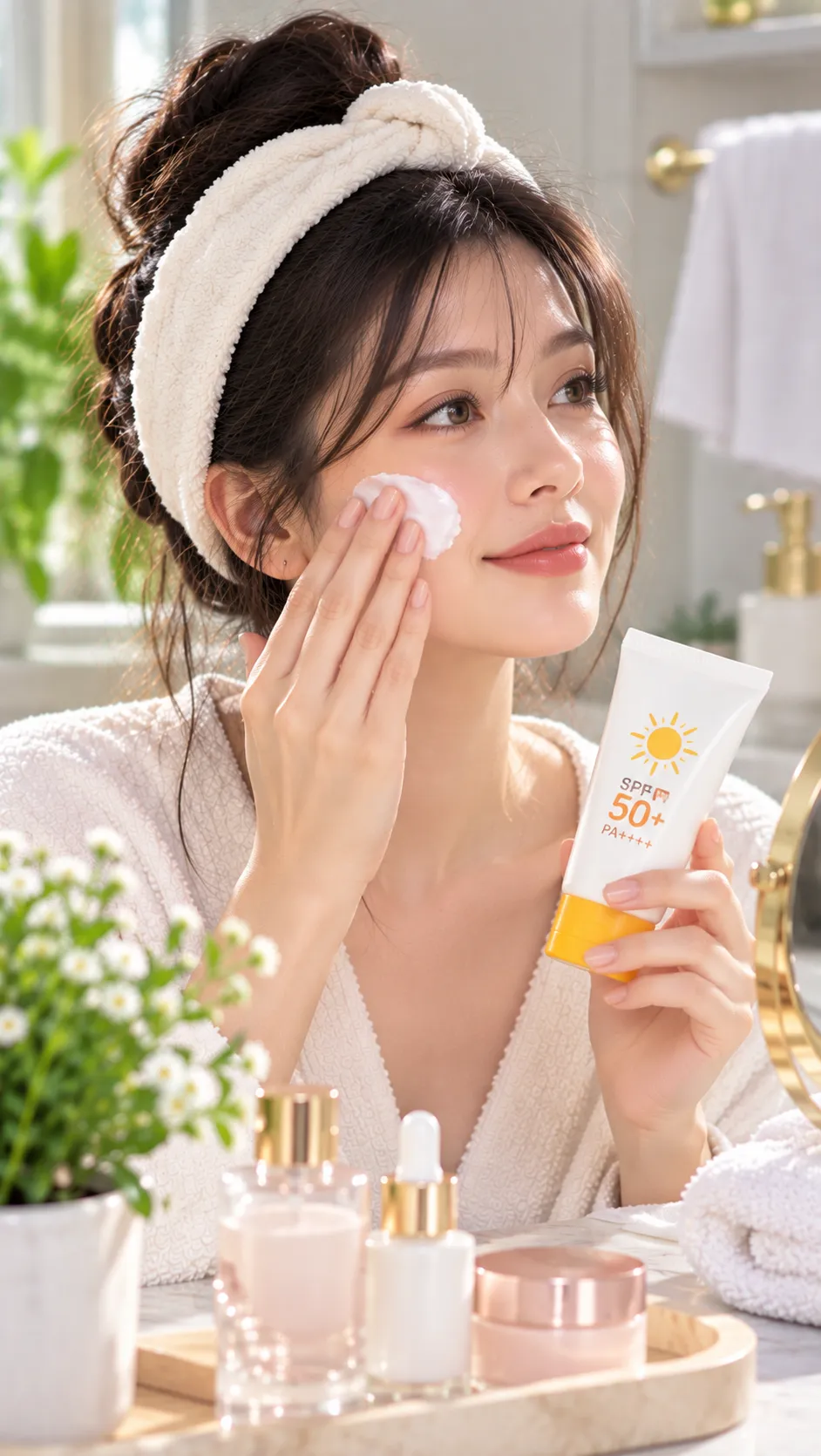
You could create the fanciest skincare routine imaginable, but skipping sunscreen every morning undermines a lot of that effort.
Use a broad-spectrum sunscreen with SPF 30 or higher as the final step of your morning skincare routine.
UV exposure can contribute to premature skin aging and uneven pigmentation. Consistent sun protection therefore plays a major role in maintaining an even, healthy-looking complexion.
Choose a sunscreen you genuinely enjoy wearing.
That part matters.
If a thick formula makes you hate applying it, look for a lighter lotion, fluid, gel, or moisturizing sunscreen that suits your skin. The best sunscreen is one you can apply properly and consistently.
Apply it generously to exposed skin before heading outside. Remember commonly missed areas such as your ears and neck.
If you spend extended time outdoors, reapply sunscreen according to the product directions, especially after sweating or swimming.
Want that immediate glass-skin finish? Many modern sunscreens leave a naturally luminous look without glitter or obvious shimmer.
Just remember: glow comes second.
Protection comes first.
7. Keep Your Night Routine Simple and Consistent

Here’s the least glamorous glass-skin secret: consistency beats chaos.
Your evening routine doesn’t need eleven products.
Start by removing makeup and sunscreen thoroughly. Follow with your gentle cleanser if necessary, then use your hydrating toner or essence, serum, and moisturizer.
That simple routine gives your skin hydration without constantly introducing new ingredients.
If you use a treatment such as a retinoid, acne medication, or exfoliating acid, follow its directions carefully. Don’t stack every active ingredient into the same evening just because each one sounds useful.
Your skin cannot read the marketing claims.
It only knows whether it feels comfortable or irritated.
A simple nighttime order might look like this:
- Remove makeup and sunscreen
- Cleanse gently
- Apply your chosen treatment when appropriate
- Add hydrating products
- Finish with moisturizer
Some treatment products require a different order, so always follow the specific product or prescription instructions.
Also, introduce new active ingredients gradually. Patch testing can help when you’re trying a new product, especially if your skin reacts easily.
If you experience persistent burning, swelling, significant irritation, or worsening acne, stop experimenting and consider speaking with a dermatologist.
Sometimes your skin needs professional advice, not another viral serum.
How Long Does a Glass Skin Routine Take to Work?
This is where skincare tests our patience.
Hydrating products can make your skin look plumper and more luminous fairly quickly. However, concerns such as uneven tone, clogged pores, acne, or texture usually need more time and may require targeted treatment.
Your skin type matters too.
Someone with naturally dry skin may need richer moisturizers. Someone with acne-prone skin may need specific treatment alongside hydration. Sensitive skin may require fewer products and slower introductions.
So don’t compare your face after one week with somebody’s filtered “three-day transformation” online.
Healthy skin doesn’t follow a viral content schedule.
Take progress photos in similar lighting if you want to track changes. That gives you a much better reference than checking your face in five different mirrors every morning.
Common Glass Skin Mistakes to Avoid
A glass skin routine can become complicated surprisingly fast.
The biggest mistake? Doing too much at once.
Try to avoid:
- Exfoliating every day without a clear reason
- Introducing several active ingredients simultaneously
- Scrubbing irritated or acne-prone skin aggressively
- Skipping moisturizer because your skin feels oily
- Skipping sunscreen on cloudy days
- Copying another person’s routine without considering your skin type
- Expecting skincare to erase normal pores and texture
Another common mistake involves chasing shine rather than hydration.
Greasy skin and hydrated skin aren’t the same thing. A healthy dewy finish should come from comfortable, well-moisturized skin—not six layers of facial oil.
Your Simple Glass Skin Routine at a Glance
Feeling overwhelmed? Keep this basic order handy.
Morning: gentle cleanse if needed → hydrating toner or essence → hydrating serum → moisturizer → broad-spectrum SPF 30+.
Evening: remove makeup/sunscreen → gentle cleanser → treatment if appropriate → hydrating toner or serum → moisturizer.
You can adjust the routine based on your skin type and the products you use.
That’s the beauty of it.
You don’t need to follow somebody else’s skincare routine perfectly. You need one that your own skin tolerates and that you can follow consistently.
Final Thoughts: Healthy Glow Beats “Perfect” Skin
The real goal of these 7 glass skin routine steps isn’t perfectly smooth, poreless skin. That standard doesn’t reflect how real human skin works.
Aim for skin that feels comfortable, hydrated, protected, and healthy.
Cleanse gently. Exfoliate carefully. Layer hydration without going overboard. Moisturize well, and make sunscreen a non-negotiable part of your morning.
Most importantly, give your routine time.
Skincare gets much easier when you stop treating every new trend like an emergency purchase.
Your glow doesn’t need twenty bottles. A simple routine you consistently follow will usually make far more sense than a complicated one you abandon after a week.